



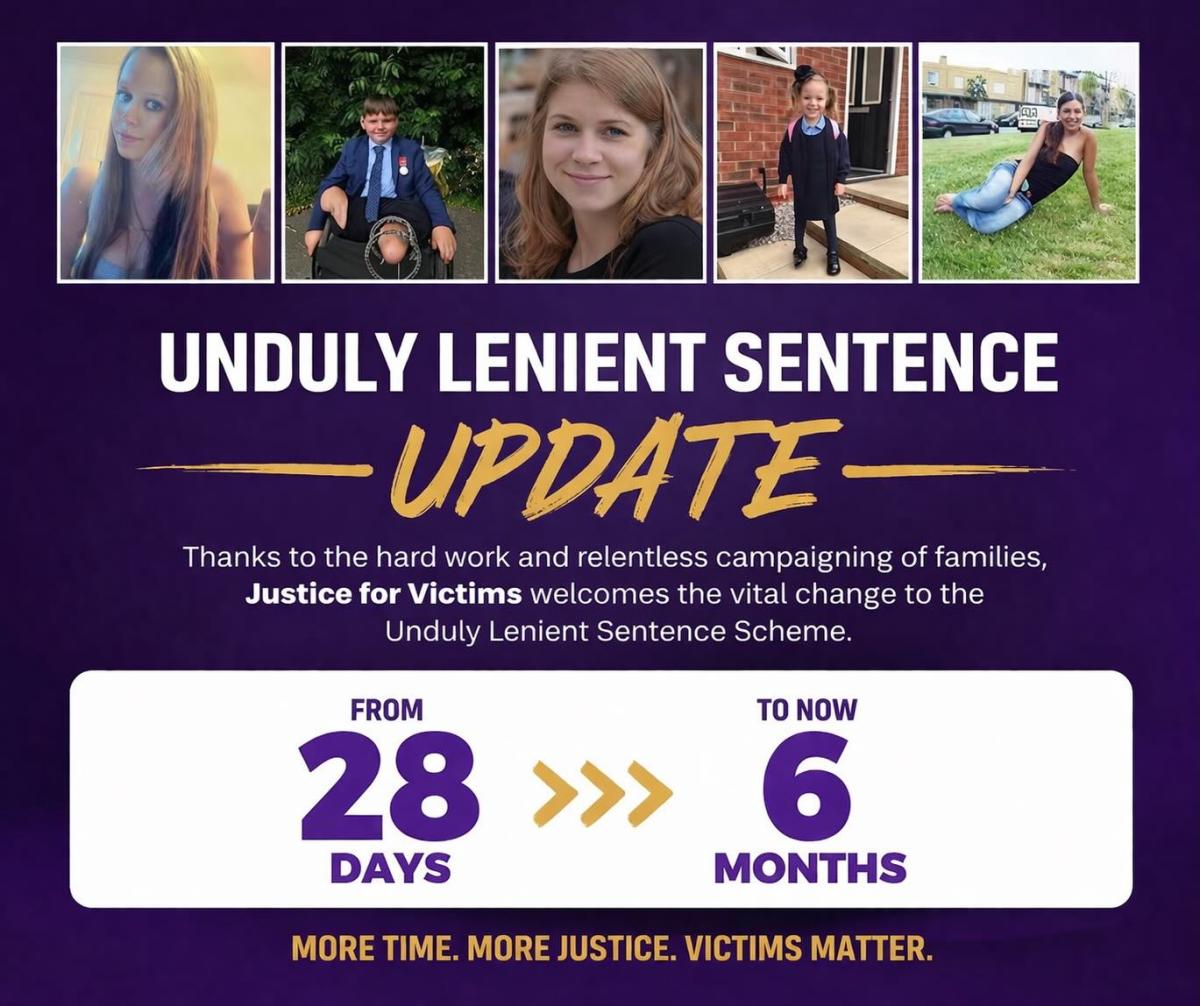

THE parents of Violet‑Grace Youens say they are “incredibly proud” after being part of a campaign that from today has helped extend the time families have to challenge unduly lenient sentences.
Violet Grace died on March 25, 2017 after being struck by a stolen car travelling at speed on Prescot Road in St Helens the day before on March 24, 2017.
Aidan McAteer, from Prescot, was jailed for nine years and four months in May 2017 for causing the death of four-year-old Violet by driving dangerously.

In the aftermath of the tragedy, her parents Becky and Glenn Youens went on to campaign successfully to change the sentencing guidelines meaning those sentenced with causing death by dangerous driving now have a maximum sentencing limit of life in jail instead of the previous guideline which was a maximum of 15 years.
However, they did not stop there and formed a group with others to ensure change being made in their loved one’s names.

They are: The parents of Sarah Everard, who was abducted whilst walking home, raped and murdered; Katie Brett, whose 16-year-old sister was raped and stabbed more than 100 times by her killer; Ayse Hussein, whose cousin was killed by a serial sex offender who stored her body in a freezer and Paula Hudgell, who campaigns on behalf of her adopted son Tony who lost his lower legs as a result of child cruelty.
The group campaigned tirelessly for change and today announced that due to their collective work, led primarily by Katie Brett, a law change will give victims’ loved ones six months to appeal instead of just 28 days.
The Unduly Lenient Sentence Scheme allows any member of the public to refer a sentence to the Attorney General and the Solicitor General – the Government’s senior legal advisers - if they believe it is too ‘soft’. They can then request the Court of Appeal reviews the sentence – a vital safeguard to help ensure sentences reflect the seriousness of the offence.
This means others in the future have more time to process the sentencing and put things in place to appeal, regardless of the case.
Speaking to the Star, Glenn and Becky said: “When you lose someone and you go to court and you get a sentence for the person who took them from you and it is not enough, 28 days is not enough time to process that and get things in place to make an appeal.
“In Katie’s case, her sister, Sasha Marsden, was just 16 when she was brutally murdered. Her killer did not receive a life sentence, and her family were not even told they had 28 days to appeal. That is exactly why this change matters.
“It takes an awful lot of work behind the scenes to make these things happen and it would not have happened without the strength of this group of people, the strength of our loved ones supporting us through it and Kieran Mullen MP and Nicola Richards.”
Commenting on how it makes them feel to once again being part of a change in the law, they added: “Honestly, we are so happy with the news today, six months is still not enough time to process a light sentence, but it is more time and that is what people need.
“It will not help any of our cases, but it makes sure that our loved ones' stories don’t end with what happened to them. The change in the name continues their legacy, and Violet’s legacy is part of all these changes we do in her name.

“This is one of many things we as a group are working on and it's so important because when you lose a loved one or are put in these situations you don’t suddenly get a law degree, you don’t know the answers but by working together we can lend our voices and get the answers and change the outcomes we had for others.”
The parents-of-three added tearfully: “We are incredibly proud to be a part of this campaign. Violet’s legacy continues, that does not die. It will live beyond us and help others.
"Organ donation, the sentencing change over dangerous driving and now this are all big parts of her legacy, more than many people ever achieve in a long lifetime.
“It’s now important for our group to make sure that even though we don’t have all the answers and it's hard work, that our loved ones' legacies continue and that the CPS and ministers impose this because part of what is important about this change is they now have to tell people from today that they have six months to appeal.

“Katie wasn’t told she even had the right to appeal. We were advised not to in our case and others have had different circumstances but they now must inform the victim’s loved ones of the right to appeal and the six months time period to do so which is a big change in getting justice for others.”
Deputy Prime Minister and Justice Secretary David Lammy said: "When someone's been through the ordeal of seeking justice and watched the person who hurt them or their loved one be sentenced, the last thing they should be worrying about is a ticking clock.
“People need time to breathe, to talk to their families, to get advice. This change means they'll have more time to do this – and most importantly, get the justice they deserve."

Minister for victims and tackling VAWG Alex Davies-Jones said: "When sentences aren’t right, people deserve the chance to say so and have their reasoning heard.
“I've heard from too many families who missed the deadline while they were still reeling from what happened in court.
“Victims deserve to know that the Unduly Lenient Sentence Scheme exists, and they shouldn’t pay a price if they don’t. That will no longer be the case. We’re making sure the system works for victims, not against them."


Share